
Cartridge Mechanical Seals
Cartridge Mechanical Seals – Pre-Engineered Sealing Units for High Reliability
Cartridge mechanical seals are factory-assembled, pre-set sealing solutions designed to eliminate installation errors, reduce downtime, and deliver consistent performance in pumps and rotating equipment. These seals are supplied as a complete unit, making installation simple and dependable across demanding industrial environments.
Unlike traditional component seals that require precise on-site measurements and manual setting, cartridge seals arrive as a ready-to-install assembly. This pre-engineered design minimizes alignment issues and ensures stable sealing performance even under fluctuating operating conditions.
Available across multiple mechanical seal types, including single, double, balanced, unbalanced, and API-compliant designs, cartridge seals are widely used in chemical processing, pharmaceuticals, water treatment, oil & gas, marine, and general industrial applications.
As an authorized distributor of Vulcan Engineering Ltd. (UK & USA), we source these cartridge seal solutions to meet global quality standards, offering long service life, reliable sealing, and reduced maintenance requirements in critical process applications.
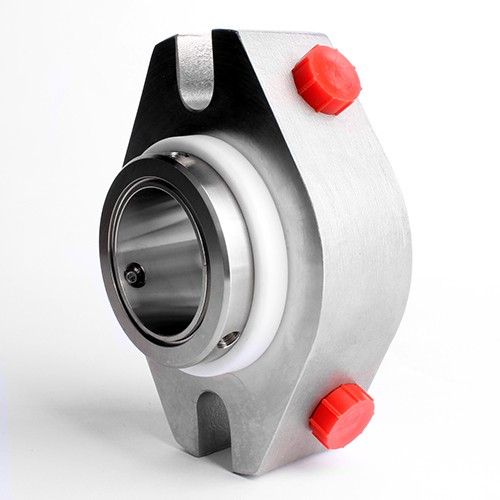
External 2 bolt, balanced Cartridge Mechanical Seal, with dual tangential environmental controls. The 55B is an excellent Gland Packing replacement that will fit majority of equipment, and removes potential for fitting error.
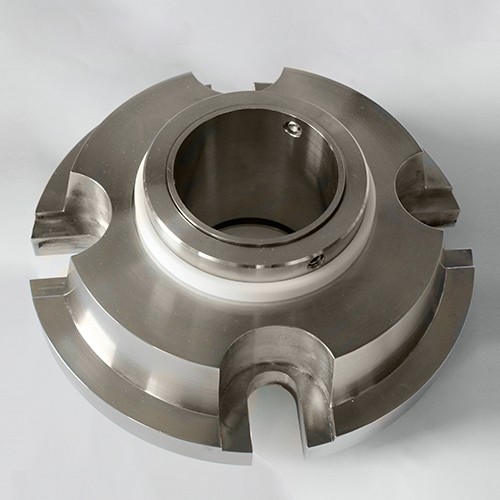
External 4 bolt, balanced Cartridge Seal. A cost effective general Cartridge Mechanical Seal, featuring advanced design features and exceptional performance, whilst reducing fitting error and lowering maintenance costs.
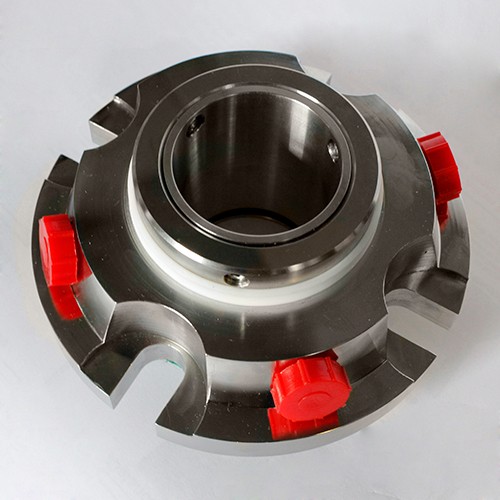
External 4 bolt, balanced Cartridge Mechanical Seal, with dual environmental controls. A cost effective general Cartridge Seal, exceptional design features and performance, whilst reducing fitting error and lowering maintenance costs.
What Are Cartridge Mechanical Seals?
Cartridge mechanical seals are self-contained sealing assemblies designed as complete, ready-to-install units for pumps and rotating equipment. These seals integrate all critical components into a single assembly, improving sealing reliability and reducing installation complexity
A standard cartridge seal assembly includes:
- Seal faces
- Springs
- O-rings
- Gland plate
- Sleeve
- Setting clips
- Fasteners
- Anti-rotation features
The seal is mounted on the pump shaft as a factory-aligned unit. Since it is supplied pre-set, there is no need for precise measurement of axial movement, face loading, or seal setting during installation. This minimizes common errors seen across different mechanical seal types.
These seals are widely used in:
- Pumps
- Mixers
- Agitators
- Compressors
- Blowers
- Rotating equipment handling aggressive or abrasive media
By offering consistent alignment, controlled face loading, and easy installation, cartridge mechanical seals deliver dependable sealing performance and longer service life in demanding industrial applications.
Construction of a Cartridge Mechanical Seal
The construction of cartridge mechanical seals is designed to ensure accurate alignment, stable face loading, and reliable sealing performance across demanding operating conditions. Each component supports performance across different mechanical seal types.
1. Seal Faces (Primary Rings)
Seal faces are the most critical components and are selected based on media, pressure, and temperature.
Common materials include:
- Carbon
- Silicon Carbide
- Tungsten Carbide
- Resin-impregnated carbon
- Ceramic
Silicon carbide offers excellent chemical resistance, while tungsten carbide is preferred for abrasive media and high-pressure applications.
2. Metal Components
Metal components provide structural strength and corrosion resistance in industrial sealing systems.
Common materials include:
- SS316
- SS304
- Duplex stainless steel
- Super Duplex stainless steel
- Hastelloy (optional)
- Alloy 20
3. Elastomers
Elastomers help maintain flexible, leak-tight sealing across a range of temperatures and pressures.
Common elastomer options include:
- Viton
- Silicone
- EPDM
- FFKM
- FKM
- NBR
4. Springs
Springs are used to maintain consistent contact between the seal faces during operation.
Available spring configurations include:
- Single spring
- Multiple spring
- Wave spring
- Bellows for high-temperature applications
5. Sleeve
The sleeve protects the pump shaft from wear and supports easy seal replacement during maintenance. This design helps prevent shaft damage and ensures consistent sealing performance over time.
6. Gland Plate
The gland plate provides accurate alignment and secure mounting of the seal within the pump housing. It plays a key role in maintaining stability and preventing leakage during operation.
Together, these components ensure cartridge mechanical seals deliver reliable sealing, reduced wear, and long service life in industrial applications.
Types of Cartridge Mechanical Seals
Different mechanical seal types are available in cartridge designs to meet varied pressure, temperature, and media requirements. Cartridge mechanical seals are supplied in complete configurations to suit general-purpose and critical industrial applications.
1. Single Cartridge Seals
Single cartridge seals are designed for standard operating conditions and non-hazardous media. They are commonly used in water pumps, chemical transfer systems, and general industrial applications.
2. Double Cartridge Seals (Back-to-Back / Tandem)
Double cartridge seals are used for hazardous, toxic, corrosive, or flammable media. These seals operate with buffer or barrier fluids to prevent leakage and improve safety.
3. Balanced Cartridge Seals
Balanced cartridge seals are suitable for high-pressure applications and help reduce heat generation at the seal faces. They provide stable sealing performance and extended seal life under demanding conditions.
4. Unbalanced Cartridge Seals
Unbalanced cartridge seals are designed for low-pressure systems and offer a cost-effective sealing solution. They are commonly used in clean fluid applications with moderate operating conditions.
5. Dry Running Cartridge Seals
Dry-running cartridge seals are used in applications where external lubrication is limited or not possible. These seals are commonly applied in mixers, agitators, and specialized processing equipment.
6. API 682 Cartridge Seals
API 682 cartridge seals are designed to meet petrochemical and refinery standards. They are available for various API flush plans and are widely used in oil and gas applications.
7. Split Cartridge Seals
Split cartridge seals feature a two-piece design for large pumps where equipment dismantling is difficult. They are commonly used in marine, mining, and heavy-duty industrial applications.
This range of cartridge mechanical seals ensures reliable sealing solutions across diverse industries and operating conditions.
How Cartridge Mechanical Seals Work
Cartridge mechanical seals work by maintaining controlled contact between the rotating and stationary seal faces to prevent leakage along the pump shaft. This sealing action is achieved through a balanced combination of spring force, process pressure, and precise alignment.
The sealing process involves the following actions:
- Process pressure acts on the seal faces to support sealing
- Springs apply a consistent force to maintain face contact
- A thin lubricating film forms between the seal faces during operation
- Cooling helps control temperature and prevent overheating
- Anti-rotation pins maintain proper alignment of seal components
- The gland plate and sleeve ensure a cantered and stable installation
This working principle allows cartridge mechanical seals to provide reliable leakage control, stable performance, and long service life across different mechanical seal types and industrial applications.
Advantages of Cartridge Mechanical Seals
Cartridge mechanical seals offer several benefits over traditional component seals, making them ideal for demanding industrial applications and diverse mechanical seal types.
-
Factory-Assembled, Pre-Set Seal
Eliminates installation errors and ensures consistent performance. -
Faster Installation and Replacement
Ready-to-install design reduces downtime and simplifies maintenance. -
Reduced Downtime and Maintenance
Minimizes operational interruptions and improves overall equipment efficiency. -
Better Sealing Integrity Under Pressure
Maintains reliable leakage control in high-pressure systems. -
Suitable for Abrasive and Corrosive Media
Materials and design protect the seal faces in harsh operating conditions. -
Long Service Life
Durable construction ensures extended operational life and stable performance. -
API Compliance Options
Available for critical applications in the petrochemical and oil & gas industries. -
Protects Pump Shaft from Wear
Sleeve and seal design prevent shaft damage, reducing replacement costs. -
Consistent Face Load Ensures Stable Operation
Springs and pre-set alignment maintain proper contact between seal faces.
These advantages make cartridge mechanical seals the preferred choice for high-reliability sealing in pumps, mixers, compressors, and other rotating equipment across industries.
Where Cartridge Seals Are Used
Industrial pumps and rotating equipment often face challenging conditions, including high pressure, corrosive media, and abrasive fluids. Cartridge seals are designed to perform reliably in these environments, making them suitable for a wide range of industries and applications.
1. Water & Wastewater
- Pumps, blowers, and sludge systems
- High solids content handling
- Effluent and RO systems
2. Chemicals & Petrochemicals
- Corrosive media, acids, alkalies, and solvents
- Hazardous environments require safe sealing
3. Food & Beverage
- CIP/SIP compatible systems
- High hygiene sealing for dairy and beverage pumps
4. Pharmaceutical
- Sterile and aseptic systems
- Clean-in-place (CIP) compatibility
5. Oil & Gas
- High-pressure hydrocarbon pumps
- API 682 compliant systems
- Offshore and onshore equipment
6. Marine Industry
- Ballast pumps
- Bilge systems
- Cooling pumps
7. Paper, Pulp & Mining
- Handling high abrasives and slurries
- Chemical additive systems
These applications demonstrate how cartridge seals deliver consistent performance, protect equipment, and reduce maintenance costs across demanding industrial processes.
Seal Operating Specifications
Industrial pumps and rotating equipment often operate under high pressure, extreme temperatures, and challenging media. Selecting the right seal for these conditions is essential to ensure reliable performance, minimal maintenance, and long service life across different mechanical seal types.
Seals are built to handle variations in pressure, temperature, speed, and media composition, making them suitable for demanding process environments. Proper selection based on these conditions ensures minimal downtime and consistent sealing performance.
Typical performance range (varies by seal model):
- Pressure: up to 40 bar
- Temperature: -40°C to +250°C
- Speed: up to 25 m/s
- Shaft size: 10 mm to 200 mm
- Media: liquids, slurries, chemicals, hydrocarbons
These operating parameters demonstrate the versatility of cartridge mechanical seals and their ability to maintain effective sealing in even the most demanding industrial applications.
Optimal Face Pairings for Performance
Choosing the right face combination is critical for ensuring optimal performance and long life of a seal. Different materials are paired to handle varying pressures, temperatures, abrasiveness, and chemical compatibility across different mechanical seal types. Proper face selection prevents leakage, reduces wear, and ensures consistent sealing in challenging process conditions.
Common face combinations include:
- Carbon vs Silicon Carbide: Ideal for chemical resistance and moderate pressure applications.
- Carbon vs Tungsten Carbide: Suitable for abrasive media and high-pressure systems.
- Silicon Carbide vs Silicon Carbide: Best for highly corrosive and high-wear applications.
- Tungsten Carbide vs Tungsten Carbide: Preferred for extremely abrasive and high-pressure environments.
- Resin Impregnated Carbon vs Tungsten Carbide: Combines durability with corrosion resistance.
Selecting the correct face combination depends on media abrasiveness, chemical compatibility, temperature, and operating pressure to ensure reliable performance in any industrial application.
Elastomer Selection Guide
The performance of a seal depends heavily on the materials used for its elastomers. Selecting the right elastomer ensures chemical compatibility, temperature resistance, and long-lasting sealing performance across different mechanical seal types.
Using the correct elastomer prevents wear, leakage, and chemical damage, providing reliable operation in challenging industrial conditions.
Recommended elastomers based on media:
| Process Media | Recommended Elastomer |
|---|---|
| Hydrocarbons | Viton / FKM |
| Hot Water | EPDM |
| Food & Pharmaceutical | Silicone / EPDM |
| Strong Acids | FFKM |
| Oils and Solvents | Viton |
| Refrigerants | HNBR |
Proper elastomer selection helps maintain effective sealing, reduce maintenance needs, and extend the equipment's service life.
<Comparison: Cartridge Mechanical Seal vs Component Seal
Industrial operations demand reliable seals to minimize downtime and protect rotating equipment. Understanding the differences between cartridge seals and component seals helps select the right mechanical seal types for each application. These differences affect installation ease, reliability, and overall equipment performance, choosing seal critical for industrial efficiency.
Feature Comparison:
| Feature | Cartridge Seal | Component Seal |
|---|---|---|
| Installation | Very easy | Complex |
| Joint Alignment | Pre-set | Manual |
| Seal Life | Longer | Shorter |
| Downtime | Low | High |
| Cost | Medium | Low |
| Reliability | Excellent | Moderate |
| Shaft Wear | Minimal | Possible |
| Industry Applications | All | Limited |
This comparison demonstrates why cartridge mechanical seals are often preferred in industrial applications, delivering superior reliability, easier installation, and extended service life over traditional component seals.
Common Failure Modes Prevented by Cartridge Seals
Incorrect installation or unsuitable seal selection can lead to early failures in pumps and rotating equipment. Cartridge mechanical seals are designed to prevent these common issues, ensuring reliable operation across different mechanical seal types.
By addressing these failure modes, cartridge seals help reduce maintenance, protect equipment, and extend service life.
Common failure modes prevented include:
- Incorrect spring compression during installation
- Wrong face pressure leading to leaks or wear
- Misalignment between rotary and stationary faces
- Axial movement fluctuation affecting seal performance
- Over-tightened seal setting causing premature failure
- Thermal cracking due to uneven heat distribution
- Uneven wear caused by improper installation
These design advantages allow cartridge mechanical seals to maintain consistent sealing performance and reliable operation even in demanding industrial applications.
Step-by-Step Installation Guide
Correct installation plays a key role in ensuring the long-lasting performance of cartridge mechanical seals. Careful attention during setup prevents early failures and keeps the pump running smoothly under various operating conditions.
Installation Steps:
- Keep the cartridge seal intact; do not attempt to disassemble it
- Clean the shaft and gland surfaces thoroughly before installation
- Gently slide the seal into place without forcing or twisting
- Tighten gland bolts gradually in a star pattern for even pressure
- Remove setting clips only after the seal is properly positioned
- Prime the pump before starting to avoid dry running
- Follow the recommended API flush plan based on your application
Adhering to these steps ensures consistent sealing, reduces the risk of leaks, and protects the pump shaft from damage. Proper installation allows cartridge mechanical seals to perform efficiently with minimal maintenance and downtime.
Applications Across Sectors
Industrial operations across multiple sectors require seals that can withstand pressure, corrosion, and abrasive media. The right sealing solution ensures smooth operation, protects equipment, and minimizes maintenance across a wide variety of applications.
Industries include:
- Pharmaceuticals: Sterile systems, clean-in-place compatibility, and leak-free performance
- Food & Beverage: High hygiene requirements, CIP/SIP systems, and dairy/beverage processing
- Petrochemical: Handling corrosive fluids, acids, and hydrocarbons under high pressure
- Chemical Processing: Sealing aggressive chemicals and toxic media safely
- Water & Wastewater: Pumps, blowers, sludge handling, and effluent systems
- Marine: Ballast, bilge, and cooling pumps with exposure to seawater
- Pulp & Paper: Abrasive slurries, chemical additives, and heavy-duty pumping
- Power Generation: High-temperature and high-pressure fluid handling
- Mining: Slurries, abrasive fluids, and chemical additives
- Oil & Gas: API-compliant pumps, offshore and onshore equipment
- Fertilizer: Handling corrosive and abrasive chemical processes
- Distillery & Brewery: Food-grade sealing and high-hygiene applications
Serving these industries highlights how reliable seals can improve operational efficiency, reduce downtime, and extend the life of pumps and rotating equipment.
How to Get Your Cartridge Seal
Selecting the right cartridge seal requires clear specifications to ensure compatibility and optimal performance. Providing accurate details helps the technical team recommend the correct cartridge mechanical seal types for your application.
Information to provide when ordering:
- Shaft diameter of the pump or rotating equipment
- Pump model and manufacturer details
- Type of product or process media
- Operating temperature range
- System pressure
- Shaft speed (RPM)
- Seal type required (single, double, balanced, unbalanced)
- API plan requirements, if applicable
- Material compatibility preferences
- Quantity required
Including drawings or pump specifications further ensures that the seal matches your equipment precisely. Providing complete information allows the technical team to deliver the most reliable, long-lasting cartridge mechanical seal solution for your process.
Why Choose KAF Seal Inc.
In demanding industrial operations, reliable sealing solutions are crucial for minimizing downtime and protecting equipment. KAF Seal Inc. combines expertise, quality products, and technical support to ensure seamless performance across cartridge mechanical seal types.
Reasons to choose KAF Seal Inc.:
- Trusted Distributor: Authorized distributor of Vulcan Engineering Ltd. (UK & USA).
- High-Reliability Seals: Durable, factory-assembled cartridge mechanical seals.
- Extensive Stock Availability: Quick delivery for urgent industrial needs.
- Custom Engineering Solutions: Tailored designs for specific pump and process requirements.
- Fast Technical Support: Expert guidance for selection, installation, and troubleshooting.
- API-Compliant Systems: Solutions meeting international petrochemical and oil & gas standards.
- 20+ Years of Experience: Proven track record serving critical industrial applications.
Choosing KAF Seal Inc. ensures dependable sealing, longer equipment life, and reduced maintenance, helping industries maintain smooth and efficient operations.
